
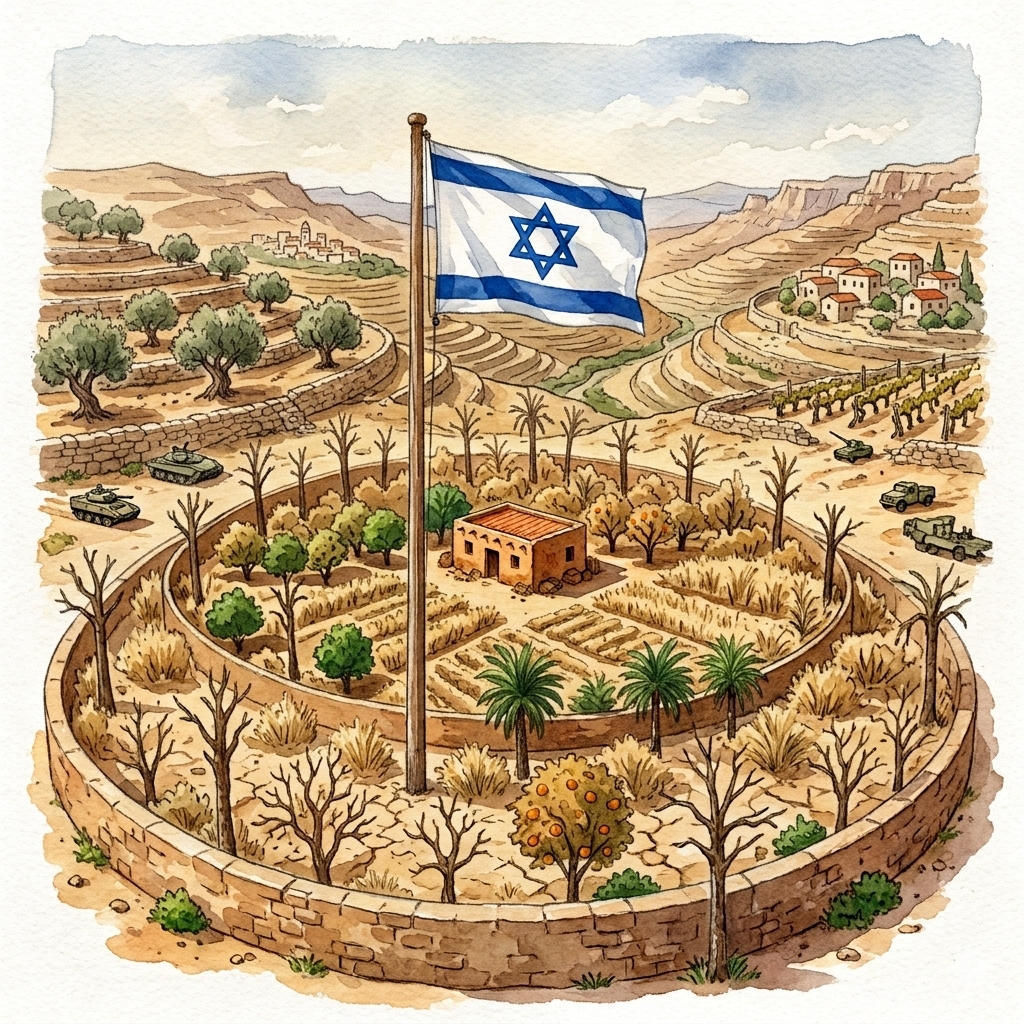
There are valid reasons to be critical of the current Israeli government. Prime Minister Benjamin Netanyahu faces ongoing corruption trials and seems to be prioritizing his own political survival over the long-term stability of the nation. Furthermore, hardline elements within his right-wing coalition have actively enabled the illegal harassment and displacement of Palestinian communities in the West Bank, and serious international questions persist regarding the humanitarian conduct of the war in Gaza. However, I reject the term “genocide” to describe Israel’s defensive actions in an urban conflict against a Jihadist Hamas whose founding documents call for the destruction of Israel, hide in tunnels where civilians aren’t allowed, and use their own people as human shields. Conversely, Israel is the only liberal democracy in the Middle East, the only one offering full equal rights to women, institutional protections for LGBTQ+ individuals, and robust civil liberties completely absent in neighboring authoritarian regimes.
Following World War II and the dissolution of the Ottoman empire remnants, emerging nationalist regimes increasingly viewed non-Muslim minorities with suspicion. The most complete displacement was on Jewish communities, who had lived peacefully in the region for hundreds/thousands of years, alongside ancient Christians. Between 1948 and the early 1970s, approximately 850,000 Jews were displaced from the Arab world. The specific methods of state-sanctioned persecution, asset confiscation, and legal exclusion varied across individual nations, but the results were uniformly devastating.
Morocco
Morocco was home to the largest Jewish community in the Muslim world, numbering roughly 265,000 in 1948. While King Mohammed V initially resisted Vichy racial laws during World War II, the post-war climate soured rapidly. Anti-Jewish riots—such as the 1948 Oujda and Jerada pogroms—and state-imposed economic restrictions forced a massive, multi-decade exodus. By the early 1970s, the vast majority had left. Roughly 200,000 fled to Israel, while tens of thousands of French-educated Moroccan Jews relocated to France and Canada. Today, only about 2,000 remain.
Tunisia
Tunisia’s Jewish community numbered approximately 105,000 in 1948. Following Tunisia’s independence from France in 1956, the government systematically dismantled Jewish communal infrastructure. The supreme rabbinical court was abolished, Jewish properties were expropriated, and the ancient Jewish quarter of Tunis was demolished under urban renewal pretexts. Riots during the 1967 Six-Day War accelerated the panic. Approximately 80,000 Tunisian Jews fled to Israel, while the remaining balance fled primarily to France. Today, fewer than 1,000 remain.
Libya
The fate of Libya’s 38,000 Jews represents one of the most violent and absolute expulsions in the region. In 1945 and 1948, nationalist pogroms in Tripoli and other cities left over 140 Jews dead, shattered the local economy, and destroyed numerous synagogues. Over 30,000 Jews fled immediately to Israel upon its founding. The final blow fell under Muammar Gaddafi in 1969, who confiscated all remaining Jewish property, canceled all debts owed to Jews, and rendered them completely stateless. Today, the Jewish population of Libya is zero.
Iraq
Iraq possessed an ancient and highly integrated Jewish population of over 135,000. Following the 1941 Farhud pogrom and the 1948 war, the Iraqi government criminalized Zionism, subjected Jews to mass arrests, and stripped them of their citizenship. Through a state-coerced airlift between 1951 and 1952, over 120,000 Iraqi Jews were forced to sign away their property and leave for Israel with only a single suitcase. Parallel to this, Iraq’s Christian population faced a prolonged but similarly devastating decline. Due to political instability and rising Islamist extremism, Iraq’s Christian population plummeted from nearly 1.5 million in 2003 to fewer than 200,000 today, with hundreds of thousands fleeing to Europe, North America, and Australia.
Saudi Arabia
Saudi Arabia presents a case of absolute legal and structural exclusion. Historically, a remnant Jewish community persisted in the southern border region of Najran. Following the consolidation of the modern Saudi state and the 1948 war, the final few families of Najran were quietly pressured to cross into Yemen, eventually joining the airlift to Israel. Instead of active displacement, 20th-century Saudi policy focused on the absolute legal prohibition of non-Muslim existence. Saudi Arabia systematically institutionalized a total “religious cleansing” by ensuring that no native non-Muslim population could ever take root, legally barring non-Muslim citizenship and public worship entirely.
Turkey
Though a secular republic rather than an Arab state, Turkey utilized severe economic and demographic engineering to displace its Ottoman-inherited minority populations. During World War II, Turkey implemented the infamous Varlık Vergisi (Wealth Tax) of 1942, an asset levy explicitly designed to bankrupt non-Muslims. While Muslim Turks were taxed at less than 5% of their wealth, Jews were taxed at 179%, and Christian Greeks and Armenians were taxed up to 232%. Those unable to pay in cash within 15 days had their properties seized and were shipped to forced labor camps in Aşkale. This economic devastation, combined with the violent 1955 Istanbul Pogrom targeting Greeks, Jews, and Armenians, shattered the community. Turkey’s Jewish population dropped from approximately 80,000 in 1948 to roughly 14,000 today, with the vast majority fleeing to Israel.
Comparing the Nature of Regional Displacement
A critical distinction lies in the nature of these displacements. The Jewish and Christian populations expelled from North African and Middle Eastern nations were peaceful, well-integrated citizens who held no hostile military designs against their host governments. Their displacement was an act of peacetime ideological homogenization, economic plunder, and political retaliation.
In contrast, the displacement of approximately 700,000 Palestinians during the 1948 Arab-Israeli war occurred during a multi-state invasion intended to destroy the nascent Jewish state. While some Palestinians were forcibly expelled by Israeli forces, many fled due to the generalized chaos of war or at the urging of Arab leaders who promised a swift military victory. Today, Israel’s ongoing military actions remain explicitly tied to active security threats, counter-terrorism, and warfare initiated by hostile entities, rather than a peacetime policy of state-led ethnic cleansing.
Despite these differing contexts, a profound double standard exists in global accountability. The international community, primarily through the United Nations, has institutionalized the Palestinian refugee issue by creating UNRWA (United Nations Relief and Works Agency for Palestine Refugees in the Near East), a dedicated agency that uniquely grants hereditary refugee status, ensuring the population count grows exponentially over generations. Conversely, the 850,000 displaced Middle Eastern Jews were never granted UN refugee status, no international agency was established to support them, and Arab states have never been held legally or financially accountable for the wholesale confiscation of their property and assets.
In conclusion, the post-WWII history of the Middle East reveals a lopsided historical memory. Arab nations and Turkey successfully and permanently purged over one million peaceful Jewish and Christian citizens with minimal international backlash. Israel, conversely, integrated hundreds of thousands of those penniless Jewish refugees while defending itself in multiple conflicts it did not start. By continuously hyper-focusing on Palestinian displacement while completely ignoring the state-sponsored targeting of non-Muslims by neighboring regimes, the international community maintains an unequal standard of accountability that distorts the true history of regional displacement.

