
The US military knows how to plan
We do it all the time
Strategic plans, campaign plans, operational plans, tactical plans, support plans, logistics plans, intelligence plans
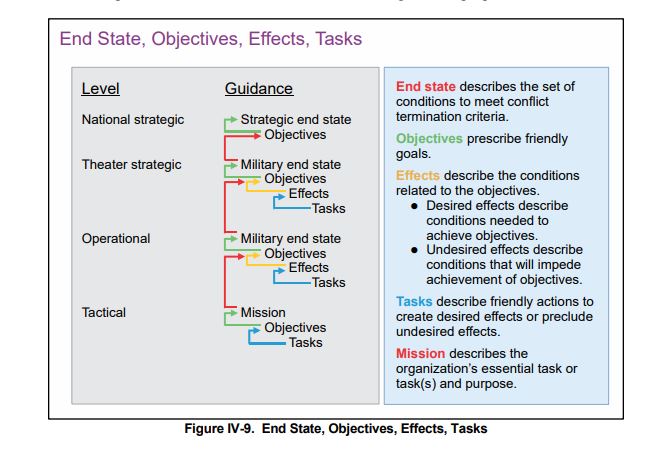
Mission analysis, a basic first step in planning, focuses on defining mission objectives and the desired end state
Certainly, the overall Afghanistan Plan of the last 20 years included creating a viable, capable Afghan Army as a primary objective
Objectives are achieved through discrete lines of operation and subordinate tasks
Progress toward achieving tasks and objectives is measured and reported regularly
For 20 years we have been refining, executing, and measuring progress toward the objective of a capable Afghan Army
In 2020, when it was decided by President Trump to withdraw from Afghanistan, it should have started a new planning effort for military withdrawal
This new Withdrawal Plan must have included objectives and end state of:
- Orderly evacuation of US military, US civilians, allies and partners
- A secure and stable Afghan government supported by a competent Afghan Army
The fact the US withdrew all military forces, prior to evacuating US civilians and partners, means the US believed the Afghan Army was viable, stable and able to defend against the Taliban
In the planning business, “assumptions” are suppositions taken as true in the absence of proof; assumptions are required to continue planning
It’s been reported the Afghanistan Withdrawal Plan assumed the Afghan Army could successfully defend against the Taliban for at least 18 months
This Withdrawal Plan assumption was critical, but surely it leveraged information gleaned from regular reporting on the long-term Afghanistan Plan objective of creating a viable, capable Afghan Army
Joint Publication 5-0, the planners’ bible, says “assumptions are unavoidable in planning, but using assumptions incurs risk. Planners must identify the role of assumptions in their plans and the impact if key assumptions are invalid….Any assumption that is not validated…becomes a risk to either the mission, force, or both.”
A good commander would focus intelligence requirements on verifying critical assumptions
To get caught flat-footed with respect to an 11-day collapse of the Afghan Army is shocking
Wasn’t the US designing an Afghan Army to fight on its own?
How much did the Afghan Army rely on the US, to include contractors for basic logistics?
How could the US military have organized, equipped and trained the Afghan Army for 20 years, but have no sense of how it would react if US forces withdrew?
The assumption of how long the Afghan Army would hold out was absolutely critical. Again, assumptions include risk and risk entails elements of both probability and severity. Maybe there was a 70% probability of the Afghan Army holding out for 18 months, but if there was a 10% chance it could collapse in a month, then that 10% chance should have driven acceptable courses of action, given the severity of consequences.
I blame the US military leadership and planners for this debacle, and the intelligence community for not knowing more about the stability of the Afghan Army
Plenty of 4-star commanders, ferried in and out of Afghanistan over the years, gave us happy talk on progress, corners about to be turned, lights at the end of tunnels…..you senior officers have collectively failed
We can’t only blame feckless politicians for this one
The US military must own it
Hey, all you 4-stars, line up. Every one of you commanded military operations in Afghanistan over the last 20 years
I said line up. That’s right, all of you.
Now…….show me your plans!
*********************************************
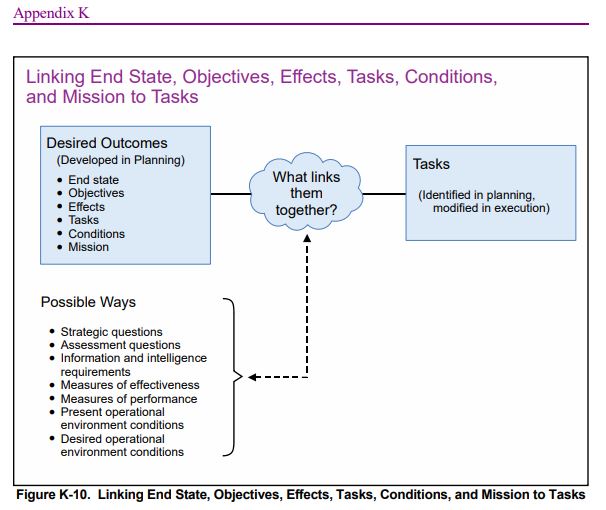
The following three charts pulled from Joint Pub 5-0, Joint Planning, 1 Dec 2020.

 Waipahu Bob